
In the book The Nature of Space and Time, Roger Penrose and Stephen Hawking present two contrasting views on the nature of reality.
Penrose argues that there exists an objective reality independent of observation. In this view, the task of physics is to uncover what is truly there, whether or not we happen to be looking.
Hawking, by contrast, takes a more pragmatic positivist stance. Hawking doesn’t require theory to correspond to reality because he doesn’t know what reality is. Instead, he argues the best one can do is to construct mathematical models and judge them by how well they predict observations.
What is it that we sense as reality?
Point is an object with one attribute: position. Circle is an object with two attributes: center and radius. Point and Circle are classes. What would be the classes of Reality? What would be the attributes of those “classes”?
First, there are directly observable quantities: detector clicks, positions on a screen, numbers printed by measuring devices. Particles that we directly observe are called Fermions.
Second, there are derived quantities, such as energy. These are not directly observed, but inferred through consistent relationships like conservation laws. We never observe orce carrying particles — Bosons —, only their effects on Fermions.
Third, there are purely abstract constructs: mathematical objects that exist only within the formalism of the theory.
At first glance, this seems like a reasonable hierarchy. What we can touch and measure feels real. What we calculate feels slightly less so. What exists only in equations feels, perhaps, suspiciously abstract.
Consider a one-kilogram rock. It feels undeniably real. If you drop it on your foot, the experience will strongly reinforce this belief.
Now lift that rock by one meter. In Earth’s gravitational field, you have increased its potential energy by approximately 9.81 joules.
This energy cannot be seen, touched, or directly measured. There is no “energy particle” hiding inside the rock waiting to be inspected. And yet, when the rock falls back down and lands on your toe, the result is both measurable and memorable.
One might say that 9.81 joules is an abstract bookkeeping device.
One’s toe, however, may disagree.
Let us apply this to the most well known equation in physics:
Energy feels abstract, because we do not observe it directly. We infer and measure it through its effects only. Matter feels very real, because of the toe.
Therefore:
which is nonsense.
The point is not that energy is unreal. On the contrary, it is one of the most precisely defined and reliably conserved quantities in physics. The point is that even very “real” phenomena rely on quantities that are not themselves directly observable.
The boundary between the real and the abstract is blurred.
Relativity deepens this ambiguity.
The search for the ”luminiferous ether” was one of the biggest scientific quests of the 19th century. Physicists back then couldn’t imagine how light waves could travel through a total vacuum. Just as sound needs air and ocean waves need water, they assumed light needed an invisible, weightless substance filling all of space: the ether. In 1905 Einstein published his paper on Special Relativity. He realized that if one just assumed the speed of light is constant for everyone, one didn’t need the ether at all. He essentially ”deleted” it from the map of the universe.
In special relativity, mass and energy are related by the (10.3) equation. What we once thought of as distinct concepts turn out to be interchangeable.
In general relativity, the situation becomes even more unusual. Gravity is no longer a force acting at a distance, but a manifestation of the curvature of spacetime itself. Massive objects distort geometry, and objects move along paths determined by that geometry.
Full GR simulation is computationally heavy, but this minimal simulation Gravity as spacetime curvature visualizes the idea; mass bending spacetime, and spacetime in turn guiding the mass.
General Relativity is all about geometry. Solutions to Einstein equations are geometries. So what is that geometry?
Even if we side with Penrose and grant mathematics a form of true, objective existence, we haven’t saved our intuitive sense of reality. We have only conceded that the foundation of the universe is built out of abstract relationships rather than solid “real” stuff.
Spacetime curvature is not something that physically exists. It is part of the mathematical framework we use to describe motion. It is abstract.
Quantum mechanics pushes abstraction even further.
The theory describes physical systems using a mathematical object called the wavefunction. This wavefunction is abstract by nature. It is not directly observable. However, its squared magnitude determines probabilities of measurement outcomes.
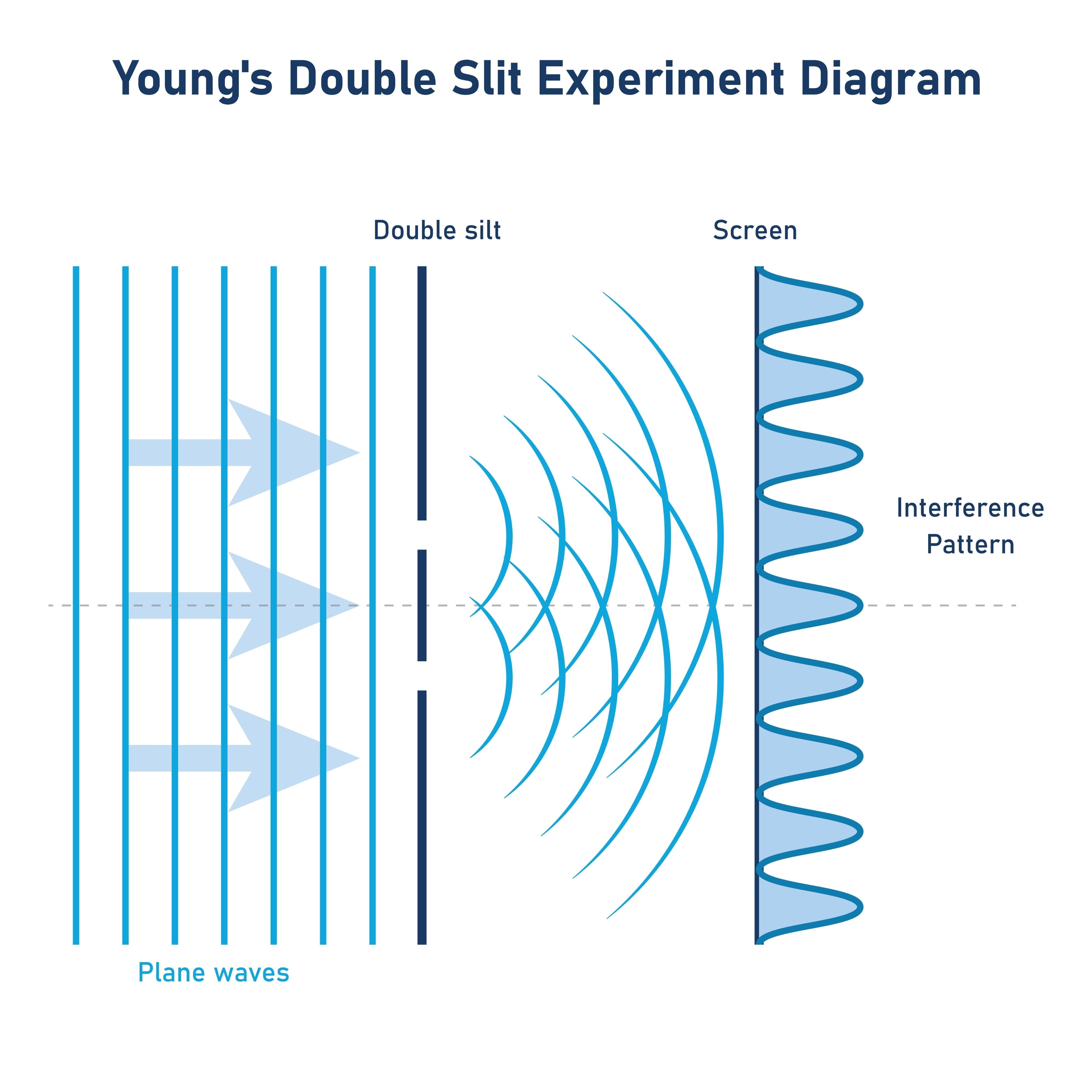
In modern formulations, what is called “particles” are excitations of underlying fields. Some of these, such as photons, can be directly detected. Others reveal themselves only indirectly through their effects.
The central machinery of the theory operates entirely in an abstract mathematical space. Yet its predictions match experiments with extraordinary precision. The most accurate physical theory ever constructed relies fundamentally on entities that cannot themselves be observed.
To see the abstract wave function in action view Dual-slit simulation video. This is real quantum mechanics simulation, Schrödinger Equation in action.
How can purely abstract entity have total control over matter and energy?
The point is not that we should take this chapter literally, or even seriously, but that all of our intuitive categories for describing reality begin to dissolve under closer examination.
The unification of physics makes the problem even harder. Attempts to unify general relativity and quantum mechanics have led to increasingly abstract mathematical frameworks. Far from eliminating abstraction, progress in physics seems to require more of it.
If abstract mathematical structures were only convenient fictions, we might expect that, with sufficient effort, they could be eliminated in favor of purely concrete descriptions. But this does not appear to be the case. If we extrapolate the trend we end up to the conclusion that the universe is abstract.
If even a small part of our most successful description of the universe is irreducibly abstract, then a natural question arises, why should the rest of reality be any different?
Our intuitive categories of ‘real object’ versus its ‘abstract description’ may be fundamentally inadequate.
Anyway, if we had to name one feature from both theories that feels something the most real, what would that be:
